
The retail world has transformed dramatically over the past decade, sparking an ongoing debate: e-commerce vs traditional retail—which one truly dominates modern consumer behavior? With the rise of digital platforms, online stores have changed how people discover, compare, and purchase products.
Yet, traditional retail, with its in-person experience, still holds strong emotional and practical appeal for millions of shoppers worldwide.
In this article, we’ll explore the key differences, advantages, and challenges of e-commerce and traditional retail. We’ll also dive into how technology, customer expectations, and evolving shopping habits are shaping the future of global commerce.
Understanding E-Commerce and Traditional Retail
What Is E-Commerce?
E-commerce (electronic commerce) refers to buying and selling goods or services online using the internet. This includes websites, mobile apps, and social media stores. Platforms like Amazon, Shopify, and Daraz have made it easy for both small and large businesses to reach global audiences.
Examples of E-Commerce:
- Online shopping websites (e.g., Amazon, eBay)
- Mobile shopping apps
- Social media marketplaces (e.g., Facebook Shops, Instagram Shopping)
- Subscription-based services (e.g., Netflix, Dollar Shave Club)
What Is Traditional Retail?
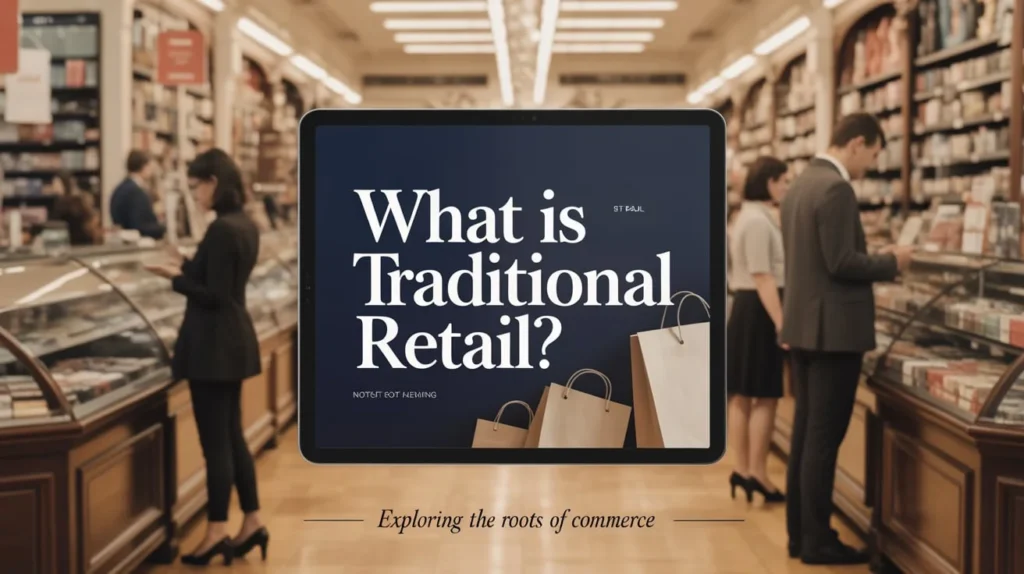
Traditional retail, on the other hand, involves physical stores where customers can see, touch, and purchase products directly. It’s the conventional model that dominated commerce for centuries before digital disruption.
Examples of Traditional Retail:
- Supermarkets and department stores
- Local grocery shops
- Clothing boutiques
- Shopping malls
Key Differences Between E-Commerce and Traditional Retail
AspectE-CommerceTraditional RetailShopping ExperienceDigital and virtual; customers browse online.Physical and sensory; customers experience products directly.Accessibility24/7 availability worldwide.Limited by store hours and location.Cost StructureLower operational costs (no rent or utilities).Higher overhead (rent, staff, utilities).Customer InteractionChatbots, reviews, and online support.Face-to-face customer service.DeliveryProducts shipped to customer’s address.Instant product possession after purchase.Returns & RefundsUsually requires shipping back to seller.Immediate return or exchange in store.Marketing ApproachSEO, PPC ads, email marketing, social media.In-store promotions, billboards, flyers.
Advantages of E-Commerce
a. Convenience and Accessibility
E-commerce provides unparalleled convenience. Shoppers can buy anything from anywhere, anytime, without leaving their homes. This 24/7 accessibility is a major driver behind its explosive growth.
b. Cost-Effectiveness
For businesses, running an online store eliminates the need for expensive physical spaces and large staff. Lower operational costs often mean better prices for customers.
c. Global Reach
An online store can reach customers in multiple countries without the need for physical branches. This gives even small startups the ability to scale globally.
d. Personalization and Data Analytics
E-commerce platforms leverage AI and big data to analyze consumer behavior. This allows for personalized product recommendations, improving sales and customer satisfaction.
e. Easy Comparison and Reviews
Before buying, customers can compare prices, read reviews, and view ratings. This transparency increases trust and helps consumers make informed decisions.
Advantages of Traditional Retail
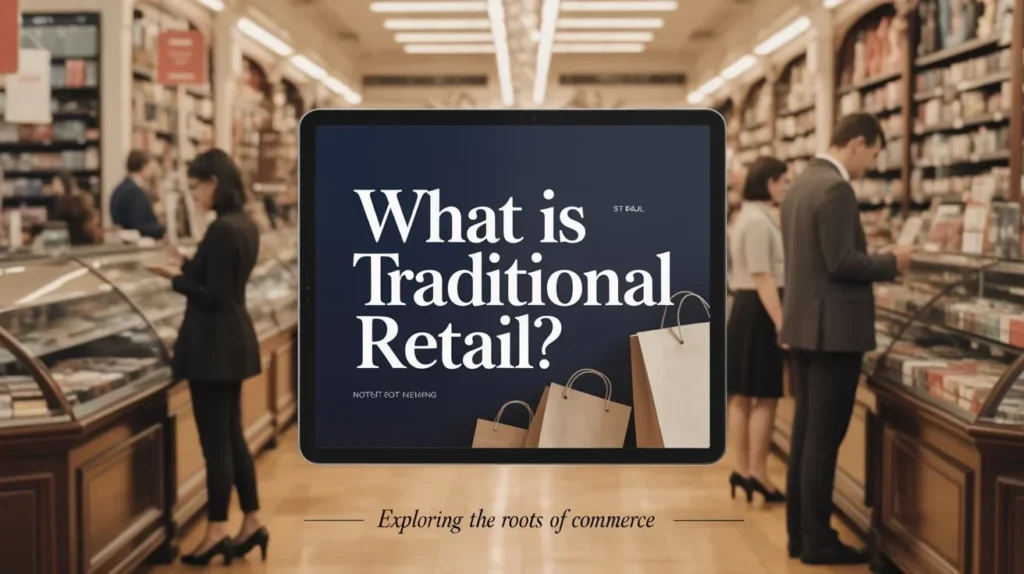
a. Tangible Experience
Traditional stores allow customers to touch, feel, and try products before buying—something e-commerce can’t fully replicate. This hands-on experience often leads to higher satisfaction and fewer returns.
b. Instant Gratification
No waiting for deliveries. Customers walk out with their purchase in hand—a key reason traditional retail still thrives in fast-paced societies.
c. Personal Customer Service
Face-to-face interactions create trust and loyalty. Trained staff can assist, upsell, and provide instant solutions to customer concerns.
d. Impulse Purchases
In-store displays and promotions encourage spontaneous purchases, something harder to replicate online.
e. Local Economic Support
Traditional stores contribute directly to local economies by creating jobs and supporting nearby communities.
Disadvantages of E-Commerce
a. Lack of Physical Interaction
Online shopping doesn’t offer the sensory satisfaction of physically examining a product.
b. Delivery Time and Costs
Shipping delays, damaged goods, or high delivery costs can reduce customer satisfaction.
c. Security Concerns
Cybersecurity remains a major issue. Customers worry about payment fraud, data breaches, and privacy violations.
d. Returns and Refund Hassles
Returning a product online often requires additional effort, such as repackaging and shipping back.
e. Over-Saturation of the Market
With so many online stores, competition is fierce. It’s challenging for new brands to stand out.
Disadvantages of Traditional Retail
a. Limited Reach
Brick-and-mortar stores depend on local foot traffic. Expanding beyond regional boundaries is costly.
b. Higher Overheads
Rent, staff salaries, and utility bills can significantly increase operational costs.
c. Time and Effort
Customers must travel, find parking, and wait in queues—something online shoppers avoid.
d. Restricted Hours
Most stores operate within fixed hours, reducing accessibility compared to 24/7 online platforms.
e. Limited Inventory
Physical stores often have space constraints, leading to limited product variety compared to online shops.
The Hybrid Model: Bridging the Gap
The line between e-commerce and traditional retail is blurring rapidly. Modern businesses are adopting a hybrid retail model—combining both online and offline strategies to offer the best of both worlds.
Examples of Hybrid Approaches:
- Click and Collect: Order online, pick up in-store.
- Virtual Try-Ons: Brands use AR (Augmented Reality) for virtual product testing.
- Pop-Up Stores: E-commerce brands launch temporary physical stores for brand exposure.
- Omnichannel Marketing: Seamless customer experience across online and offline channels.
This approach provides convenience, personal interaction, and flexibility—making it the future of retail.
Future Trends: E-Commerce vs Traditional Retail
a. Artificial Intelligence (AI)
AI helps online stores provide smart recommendations, chatbots, and voice assistants that improve customer experience.
b. Virtual Reality (VR) Shopping
Soon, VR will allow customers to “walk through” digital stores, try products virtually, and make purchases instantly.
c. Sustainable Shopping
Both e-commerce and traditional retailers are shifting towards eco-friendly practices—like sustainable packaging and carbon-neutral delivery.
d. Social Commerce
Platforms like Instagram and TikTok are turning social media into shopping hubs, merging entertainment with instant purchasing.
e. Experiential Retail
Physical stores are evolving into experience centers, offering events, demos, and immersive brand experiences rather than just sales.
E-Commerce vs Traditional Retail: Which Is Better for Businesses?
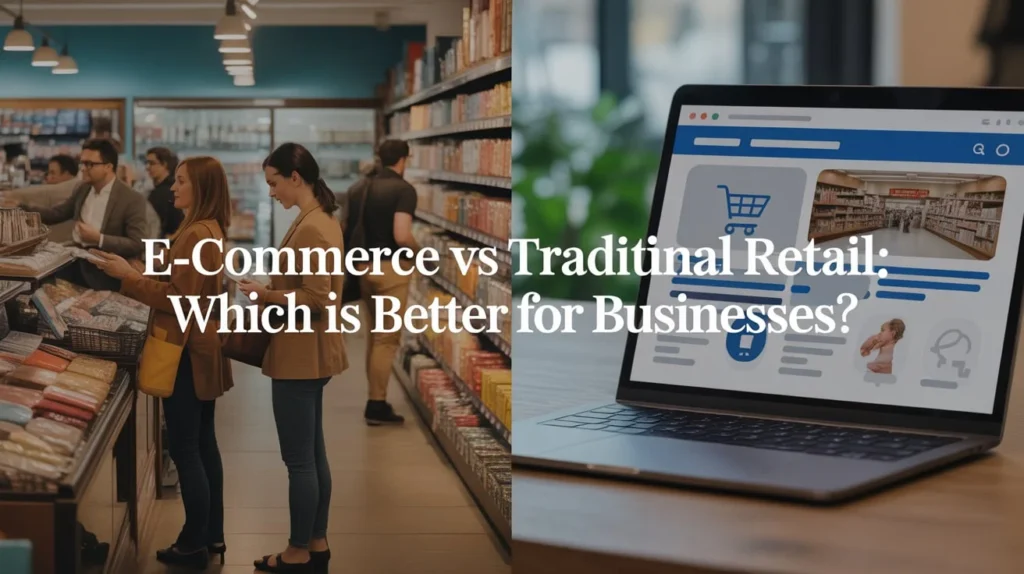
E-commerce is ideal for:
- Startups with limited budgets
- Businesses targeting global customers
- Brands focusing on convenience and data-driven marketing
Traditional retail is best for:
- Luxury brands that rely on physical experiences
- Local businesses with loyal customers
- Industries where product testing is essential (e.g., fashion, furniture)
However, the smartest businesses integrate both. A hybrid strategy ensures maximum customer reach, brand trust, and profitability.
Internal Linking Suggestions
If this article is for your website, consider linking to related internal pages for SEO benefits:
- “Top 10 E-Commerce Marketing Strategies”
- “How to Start an Online Store Successfully”
- “Retail Trends to Watch in 2025”
- “The Role of AI in Modern Business Growth”
These links help boost your site’s SEO authority and user engagement.
FAQs
1. Is e-commerce more profitable than traditional retail?
E-commerce generally offers higher profit margins due to lower overhead costs. However, success depends on competition, product demand, and marketing strategies.
2. What are the biggest challenges of traditional retail?
Traditional retailers face challenges like high rent, limited reach, and changing consumer preferences toward online shopping.
3. Can e-commerce and traditional retail coexist?
Yes, many brands combine both models. This hybrid approach increases flexibility, improves customer satisfaction, and enhances sales potential.
4. How is technology influencing retail?
Technologies like AI, VR, and automation are reshaping both e-commerce and in-store experiences, making shopping faster and more personalized.
5. Which model will dominate in the future?
While e-commerce will continue growing rapidly, traditional retail won’t disappear—it will evolve. The future lies in blending both worlds for a unified shopping experience.
Conclusion
The debate between e-commerce vs traditional retail isn’t about one replacing the other—it’s about evolution. E-commerce represents speed, convenience, and innovation, while traditional retail embodies trust, experience, and human connection.
In the end, the future of shopping is hybrid—a seamless mix of digital accessibility and physical experience. Businesses that understand this balance will not only survive but thrive in the ever-changing world of modern commerce.