
Introduction Your business card design may seem like a small task—but in reality, it carries enormous weight. In a world where networking and first impressions matter more than ever, the right business card design can serve as both a powerful marketing tool and a lasting memento of you and your brand.
Whether you’re handing out cards at a networking event in Karachi, or leaving one behind after a meeting in Lahore, a well-crafted business card design speaks volumes about your professionalism, attention to detail, and brand identity.
In this article, we will explore everything you need to know about designing a business card that stands out: from core principles and design best-practices to print specifications, material choices, digital and eco-friendly alternatives, and how to integrate it into your broader branding strategy. Let’s dive in.
Why Business Card Design Still Matters
The Role of a Business Card
- A business card acts as a compact summary of who you are, what you do, and how someone can reach you.
- It is exchanged in face-to-face settings—networking events, meetings, conferences—so it functions as a memorable physical touchpoint.
- Even in the digital age, a professional business card design conveys credibility, trustworthiness and brand consistency.
Why Attention to Design Is Critical
- Poor design, low-quality printing, or crowded information can make your card end up in the trash, rather than in someone’s wallet.
- Conversely, a distinctive, well-executed business card design can help you stand out from dozens of others.
- The business card design isn’t just functional—it’s part of your brand story. Your choice of material, finish, layout, and typography all reflect your brand values.
Fundamentals of Business Card Design
Key Elements to Include
Here’s a table summarising essential vs optional elements for your business card design:
CategoryMandatory ElementsOptional ElementsIdentityName, job title/role, company name/logoPronouns, credentials (e.g., “MBA”, “PhD”), tagline or positioning statementContact InfoPhone number, email address, websiteSocial media handles, physical address (if relevant)BrandingLogo, brand colours, brand typefaceBrand imagery, QR code, background patternsLayout/PrintClear typography, legible font size, correct sizeUnique shape, special finishes (foil, embossing), premium material
Standard Sizes & Print-Ready Specs
To ensure a clean business card design that prints well and fits standard wallets, follow these typical specs:
- US standard: 3.5 × 2 in (with bleed 3.75 × 2.25 in)
- EU standard: 85 × 55 mm (with bleed 91 × 61 mm)
- Print specs: CMYK colour mode, 300 dpi resolution, safe-zone margins
Typography & Layout Guidelines
- Ensure fonts are large enough to be read comfortably—avoid overly decorative fonts.
- Maintain a clear visual hierarchy: company name/logo first, your name second, contact details last.
- Leave sufficient white (negative) space for a clean and premium feel.
- Align layout flow (left-to-right or top-down) to the reading direction of your language.
Branding Consistency
Your business card design should reflect your brand identity:
- Use the same colour palette, typography, and logo found on your website and marketing materials.
- The card should feel like an extension of your overall brand—not an isolated print piece.
Design Tips and Best Practices

Top Tips for a Strong Business Card Design
- Target your audience: Tailor the card style to suit your clients or industry.
- Keep it readable: Prioritize legibility over decorative elements.
- Limit information: Include only what’s essential.
- Use blank space effectively: White space makes content stand out.
- Choose quality materials: Thick paper and refined finishes enhance professionalism.
- Proofread carefully: Spelling or contact errors can cost opportunities.
- Add a CTA: Encourage a next step such as visiting your website or scanning a QR code.
Common Mistakes to Avoid
- Overcrowding with text or graphics.
- Using fonts that are too small or overly stylized.
- Ignoring bleed and margin guidelines.
- Printing on cheap or thin stock.
- Inconsistency with your overall brand identity.
Creative Enhancements & Material Choices
Going Beyond the Basic Card
If you want a premium business card design, consider:
- Unique shapes or sizes: Square, mini, or vertical layouts.
- Non-traditional materials: Metal, wood, plastic, or textured paper.
- Finishing options: Foil stamping, embossing, spot UV gloss, raised lettering.
- Double-sided printing: Use one side for branding, the other for contact info or QR code.
Material & Finish Considerations
When choosing materials, focus on:
- Card stock weight: Heavier cards feel premium (350 gsm or higher).
- Finish: Matte for elegance, gloss for vibrancy, texture for uniqueness.
- Writeability: Leave a writable surface if you expect recipients to jot notes.
- Sustainability: Use recycled or eco-certified paper for an environmentally conscious image.
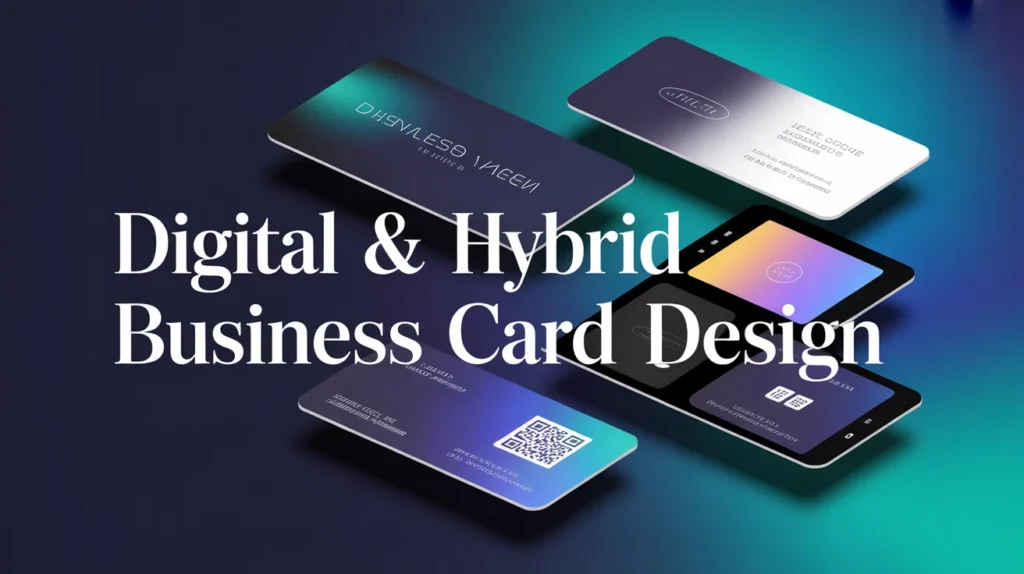
Digital & Hybrid Business Card Design
The Rise of Digital Business Cards
A digital business card is an electronic version of a physical card, often shared via QR codes, NFC chips, or links.
- They are eco-friendly, easy to update, and simple to share online.
- Many professionals now combine physical and digital cards for flexibility and reach.
Design Tips for Digital/Hybrid Cards
- Ensure QR codes are clearly visible and lead to a mobile-optimized page.
- Match digital card visuals to your physical design for brand consistency.
- Use digital versions to include extended details like portfolios, videos, or booking links.
- Highlight your “green” approach if you’re using paperless networking.
Step-by-Step Workflow for Business Card Design
StepDescriptionTips & Notes1Define objective & target audienceIdentify your goal—networking, branding, or direct sales.2Gather brand assets & layout ideasCollect logos, fonts, color palette, and sample inspiration.3Choose card size, material, and finishStandard size or custom shape; matte, gloss, or textured finish.4Draft the contentInclude name, title, contact info, website, social media, and QR code.5Create initial designMaintain clear hierarchy and breathing space.6Review print specsUse CMYK, 300 dpi, and proper bleed margins.7Proof and testPrint a sample and check for readability and errors.8Seek feedbackGet opinions from peers or clients.9Finalize and printChoose a reputable printer and verify proofs before mass printing.10Distribute strategicallyHand out cards professionally and always follow up.
Integrating Business Cards into Branding & Networking
Make the Card Part of Your Brand Ecosystem
- Keep the same logo, fonts, and tone across all marketing materials.
- Include subtle elements from your website or brochure design.
- Make your business card a reflection of your overall identity.
Using Cards for Networking
- When handing out cards, introduce yourself naturally and mention your work.
- Include a clear call to action—invite recipients to visit your website or connect on LinkedIn.
- Keep cards clean, accessible, and ready for events or meetings.
Evolve and Refresh
- Update your design every few years or when rebranding.
- Track which designs or materials resonate most with your audience.
- Stay modern with digital integrations or sustainable materials.
Case Study What Works and Why
Example
Scenario: You’re a business consultant aiming for a sleek and trustworthy brand image. Design Approach:
- Horizontal layout, 3.5 × 2 in size.
- Thick matte paper (400 gsm) in navy blue and silver.
- Company logo in silver foil, centered on the top.
- Name and title in white font, contact info aligned neatly.
- QR code on back linking to your portfolio site. Why It Works:
- Minimalism reinforces professionalism.
- The color scheme signals confidence and sophistication.
- The QR code bridges physical and digital engagement.
- The tactile matte finish creates a premium impression.
Business Card Design Trends to Watch
- Minimalist Aesthetics: Clean layouts, lots of space, and limited color use.
- Interactive Features: QR codes, NFC chips, and augmented-reality integration.
- Eco-Friendly Designs: Recycled paper, biodegradable coatings, or digital alternatives.
- Unconventional Materials: Metal, bamboo, and transparent plastic for differentiation.
- Vertical & Square Formats: Break away from tradition for a modern edge.
These trends ensure your card feels current while maintaining brand integrity.
Checklist Before Printing
- All contact information verified and updated.
- Logo placement is clear and high-resolution.
- Font size is readable (8–12 pt minimum).
- Colours are CMYK, not RGB.
- Bleed and margin areas defined.
- Print test sample checked for clarity and tone.
- No spelling or alignment errors.
- Professional printer selected.
- Sufficient cards printed for upcoming events.
- Cards stored properly to prevent bending or fading.
FAQs
Q1: What is the ideal size for a business card? The standard size is 3.5 × 2 in in the U.S. and 85 × 55 mm in Europe. Always include a 3 mm bleed for safe printing.
Q2: Should I include social media handles on my business card? Yes, if they are relevant to your profession. For example, designers and marketers benefit from sharing LinkedIn, Instagram, or portfolio links.
Q3: Are vertical business cards a good idea? They can stand out visually, but ensure the orientation fits your brand and the layout remains readable.
Q4: How can I make my business card eco-friendly? Use recycled or FSC-certified paper, soy-based inks, and minimal finishes. You can also add a QR code for digital contact sharing.
Q5: What font works best for business cards? Simple, professional fonts like Helvetica, Lato, or Garamond work best. Avoid overly decorative or thin fonts that hinder readability.
Conclusion
A thoughtfully crafted business card design is far more than a contact tool—it’s a powerful branding asset. By investing in quality materials, modern finishes, and consistent visual identity, you communicate professionalism and reliability before saying a word.
Focus on clarity, premium feel, and brand alignment. Combine the timeless appeal of physical cards with the innovation of digital tools for maximum impact. And remember—the best business card isn’t just seen, it’s kept.