
As technology continues to evolve, two terms dominate conversations about data processing and digital infrastructure: edge computing vs cloud computing. Both are powerful paradigms shaping how businesses handle data, deliver services, and build innovative applications.
While cloud computing centralizes data in large data centers, edge computing brings processing closer to where data is generated. Understanding the differences between edge computing and cloud computing in 2025 is essential for IT leaders, developers, and entrepreneurs aiming to build faster, smarter, and more cost-effective solutions.
What is Cloud Computing?
Cloud computing refers to delivering computing resources — servers, storage, databases, networking, software, and analytics — over the internet (“the cloud”). Instead of owning physical infrastructure, organizations rent scalable resources from cloud providers like AWS, Microsoft Azure, or Google Cloud.
Key Benefits of Cloud Computing:
- On-demand scalability
- Cost efficiency (pay-as-you-go)
- Centralized management
- Global accessibility
Common use cases include hosting websites, running enterprise software, big data analytics, and SaaS products.
What is Edge Computing?
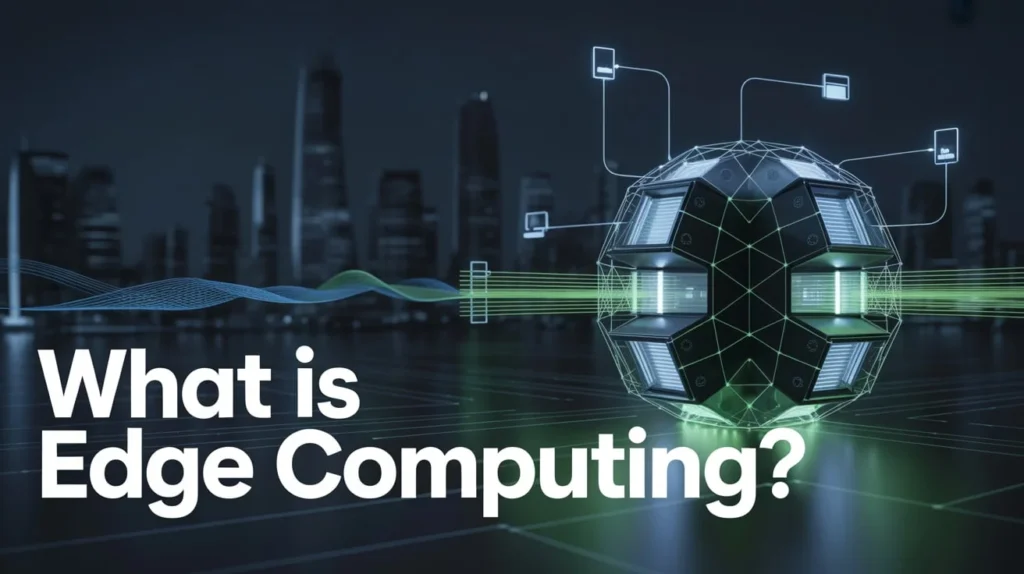
Edge computing is a distributed model where data is processed closer to its source — at the “edge” of the network — rather than sending it all to a distant data center. This could mean processing data on IoT devices, local servers, or 5G base stations.
Key Benefits of Edge Computing:
- Ultra-low latency (faster response times)
- Reduced bandwidth usage
- Improved reliability for mission-critical systems
- Enhanced privacy (data can stay local)
Edge computing shines in scenarios where speed and real-time insights matter, like autonomous vehicles, smart factories, or telemedicine.
Why Compare Edge Computing vs Cloud Computing?
Both models solve different problems. Cloud is ideal for heavy data storage and complex computation, while Edge is perfect for real-time responsiveness. In 2025, many businesses adopt a hybrid approach, combining the best of both worlds.
Table: Edge Computing vs Cloud Computing
FeatureEdge ComputingCloud ComputingLocation of ProcessingNear data source (devices, gateways)Centralized data centers over the internetLatencyExtremely low (milliseconds)Higher due to network round tripsBandwidth UsageReduced (local filtering)High (all data sent to cloud)ScalabilityLimited to local infrastructureVirtually unlimited (elastic)Cost ModelInitial device/setup costsPay-as-you-go subscriptionSecurity & PrivacyLocal control, less exposureProvider-managed, but data travels furtherBest ForReal-time apps, IoT, autonomous systemsBig data analytics, enterprise apps, SaaS
Use Cases for Edge Computing
- Autonomous vehicles needing instant sensor analysis
- Smart cities monitoring traffic, utilities, and public safety
- Industrial IoT for predictive maintenance
- AR/VR applications requiring ultra-low latency
Use Cases for Cloud Computing
- Website and app hosting
- Enterprise resource planning (ERP) systems
- Machine learning model training on large datasets
- Backup and disaster recovery
Hybrid Approach: Combining Edge and Cloud
The future isn’t “edge or cloud” but “edge and cloud.” Many organizations process time-critical data at the edge but send aggregated data to the cloud for deeper analytics and storage. This model reduces latency while maintaining the scalability and power of cloud services.
Advantages of Edge Computing Over Cloud Computing
- Speed: Instant processing for real-time decisions
- Bandwidth Savings: Only critical data sent to cloud
- Offline Capabilities: Operates even with unstable connectivity
Advantages of Cloud Computing Over Edge Computing
- Massive Scalability: Handle virtually unlimited workloads
- Lower Maintenance: Provider handles hardware, security, updates
- Advanced Services: Access to AI, big data tools, and global networks
Challenges to Consider
Edge Computing:
- Higher upfront hardware costs
- Management complexity across many devices
- Limited compute power compared to cloud
Cloud Computing:
- Dependency on internet connectivity
- Latency issues for time-sensitive tasks
- Data sovereignty concerns (cross-border regulations)
Future Trends: Edge and Cloud in 2025
- 5G Expansion: Faster networks make edge computing more powerful.
- AI at the Edge: Devices run machine learning models locally for real-time predictions.
- Serverless Cloud: Simplifies cloud development with event-driven functions.
- Hybrid Architectures: Seamless integration between edge devices and cloud backends.
FAQs
Q1. Is edge computing replacing cloud computing? No. Edge computing complements cloud computing by handling time-sensitive tasks locally while cloud handles storage and heavy computation.
Q2. Which is cheaper: edge computing or cloud computing? Cloud computing often has lower upfront costs. Edge requires investment in local devices but can save bandwidth and reduce ongoing fees.
Q3. Why is edge computing faster? Because data is processed closer to its source, eliminating round trips to distant data centers.
Q4. Can I use both edge and cloud computing together? Yes, most modern architectures are hybrid — edge handles immediate processing, cloud handles long-term analytics.
Q5. What industries benefit most from edge computing? Industries needing instant decisions: manufacturing, healthcare, autonomous transport, gaming, and AR/VR.
Conclusion
Understanding edge computing vs cloud computing is crucial in 2025 for businesses aiming to deliver faster, smarter, and more efficient digital services. Cloud computing excels in scalability and centralized power, while edge computing shines in real-time responsiveness and bandwidth savings. The future lies in blending both models — leveraging the agility of edge with the muscle of the cloud — to build innovative, customer-centric solutions.